
Atlanta Police Records
Atlanta police records come from the Atlanta Police Department, one of the largest law enforcement agencies in the Southeast. The city sits mostly in Fulton County, though parts extend into DeKalb County. With over half a million residents and a large number of daily commuters, APD handles tens of thousands of incidents each year. Police records from Atlanta include incident reports, arrest records, accident reports, and other law enforcement files that are public under Georgia law. Getting the right record starts with knowing how APD manages its files and what the process looks like for the public.
Atlanta Police Records Facts
Atlanta Police Department
The Atlanta Police Department is based at 226 Peachtree St SW, Atlanta, GA 30303. You can reach them at (404) 614-6544. For emergencies, call 911. APD is a large department with multiple zones, precincts, and specialized units. The records division handles requests for police reports.
APD divides the city into six patrol zones. Each zone has its own station and officers. When an incident happens, the officers in that zone respond and write the report. All reports end up in the central records system. You do not need to contact the specific zone station to get a report. The records division at APD headquarters can pull files from any zone.
The Atlanta Police Department website has details on how to reach the records unit and what forms you may need. The site also lists crime stats, press releases, and contact info for each zone. If you want to check the status of a report or learn more about an active case, the website is a good starting point.
| Address | 226 Peachtree St SW, Atlanta, GA 30303 |
|---|---|
| Phone | (404) 614-6544 |
| Emergency | 911 |
| Hours | Monday - Friday, 8:00 AM - 5:00 PM |
How to Get Atlanta Police Reports
You can get police reports from APD by visiting the records division in person. Bring a valid ID and the details of the incident. Case numbers, dates, and names help the staff find your file faster. Walk-in requests are common, and the office handles many of them each day.
Written requests also work. You can send a letter or email to the APD records division. Include your name, contact info, and as much detail as possible about the record you need. Georgia's Open Records Act under O.C.G.A. 50-18-70 gives the public the right to access police records. APD must comply with this law like every other agency in the state.
Fees apply. Paper copies cost $0.10 per page. The first 15 minutes of search time are free. After that, the agency can charge based on the hourly rate of the lowest-paid employee who can pull the record. If the total will run more than $25, they have to tell you first so you can decide whether to proceed. Most standard reports are short and inexpensive to copy.
APD has three business days to respond to your request. They can give you the records, tell you the cost, or issue a written denial citing the specific legal reason. Denials must reference the exact statute that applies.
Note: APD handles a very high volume of records requests, so including a case number with your request can cut the wait time down significantly.
Atlanta Accident Reports
Car crash reports are one of the most common types of police records people look for in Atlanta. Given the city's traffic on I-75, I-85, I-285, and dozens of busy surface streets, accidents happen constantly. The officer who responds to the scene writes the report. If it was an APD officer, the report is with APD. If the Georgia State Patrol handled it, the report goes through their system instead.
The Georgia EPORTS system is the online portal for State Patrol crash reports. Reports cost $5 each and are sent by email. This system covers accidents on highways and interstates where state troopers responded.
The Georgia DPS EPORTS portal lets you search for and purchase accident reports online.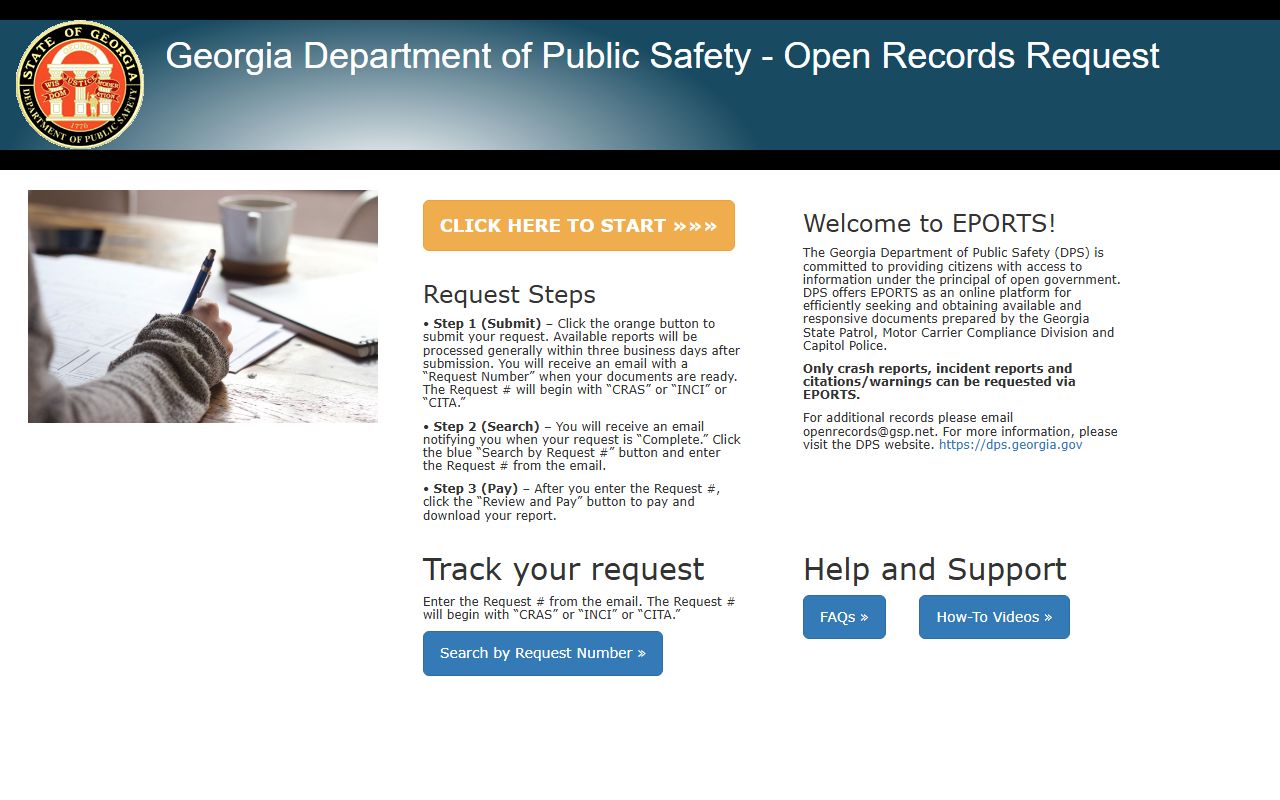
EPORTS is the fastest way to get a State Patrol crash report from anywhere in Georgia, including all of metro Atlanta's highways.
For crashes on city streets where APD responded, you need to go through APD's records division directly. You can also check BuyCrash by LexisNexis since some local agencies upload crash reports there for online access.
Open Records Law in Atlanta
Georgia's Open Records Act is the legal basis for accessing police records in Atlanta. O.C.G.A. 50-18-71 sets the timeline for responses. Agencies have three business days. That applies to APD, the Fulton County Sheriff, and every other law enforcement agency in the area. The law is clear on this point.
Some records are exempt. O.C.G.A. 50-18-72 lists the categories that can be withheld. Records from active investigations may not be released if doing so could compromise the case. But initial incident reports and initial arrest reports stay public even during open investigations. This is an important point that many people miss. You can still get the basics of what happened even while a case is being worked.
Records that could put someone at risk or reveal confidential sources may also be held back. After a case closes and any court process wraps up, the full file usually becomes available. If you think a denial was wrong, you can appeal or file a complaint with the Georgia Attorney General's office.
Atlanta Criminal Records
Criminal history records go beyond single police reports. A criminal history covers all arrests and convictions tied to a person across agencies and time. The Georgia Bureau of Investigation runs the Georgia Crime Information Center, which is the statewide criminal records database.
The Fulton County Clerk of Superior Court is another resource. The clerk keeps all criminal case files for the county court system. This includes filings, plea deals, trial outcomes, and sentencing. Court records tell you what happened after the arrest. Police records tell you what happened at the scene. Between the two, you get the full picture.
The Fulton County government portal has links to court records and other county services that may be helpful if you are searching for case information tied to Atlanta.
Other Law Enforcement in Atlanta
APD is not the only law enforcement agency that operates in Atlanta. The Fulton County Sheriff's Office covers areas outside city limits and handles courthouse security and the county jail. MARTA Police patrol the transit system. Georgia State University Police cover their campus. Emory University has its own police force. The Georgia State Patrol covers highways and interstates.
This matters because the agency that responded to the incident is the one that has the report. If something happened on a MARTA train, APD might not have the report. If it happened on I-85, the State Patrol likely handled it. Figuring out which agency took the call is always step one when you are looking for a police record in Atlanta.
The Georgia Sheriffs' Association keeps a directory of all sheriff's offices in the state if you need to reach agencies in surrounding counties.
Note: Atlanta straddles Fulton and DeKalb counties, so some incidents on the DeKalb side fall under DeKalb County Police rather than APD.
Atlanta Police Records by Mail
Mail requests are an option if you cannot visit in person. Send your request to the Atlanta Police Department, Records Division, 226 Peachtree St SW, Atlanta, GA 30303. Include your name, return address, phone number, and all the details about the record you want. A case or report number is very helpful.
Include a check or money order for the expected cost if you know it. Otherwise, the records division will contact you with the amount once they locate your file. Mail requests take longer than walk-ins due to postal transit time on both ends. Allow at least two weeks for the full turnaround.
Keep copies of everything you send. If there is a dispute later about timing or what was requested, having your own records makes things much simpler to sort out.
Fulton County Police Records
Atlanta is in Fulton County. All police records at the county level are managed by the Fulton County Sheriff's Office. For incidents outside Atlanta city limits but still within Fulton County, the sheriff's office or the relevant city police department will have the file.
Nearby Cities
These cities near Atlanta also have police records available through their own departments or county agencies.